
Maximise the value of your contracting staff by using these contractor management best practices, designed to ensure contractors can contribute quickly and leave lasting capability behind when an assignment ends.
Hiring the right person is only the starting point. To gain the strongest return from a contract or interim workforce, organisations need clear objectives, effective onboarding, strong communication, meaningful performance measures and a plan for transferring knowledge back into the permanent team.
Demand for flexible talent is strengthening. Temporary billings in the UK continue to increase month over month, as organisations increasingly use contractors and interim executives to complete internal projects and support growth.
But bringing a contractor into the business does not automatically create value. Organisations need to give them the conditions to deliver it.
Effective contractor management connect the original reason for hiring with the way an assignment is managed day to day. A contractor brought in to support a finance transformation, for example, should understand not only the project milestones but the wider commercial outcome the organisation is trying to achieve.
This is incredibly important as contractors and interims take on more strategically significant work. 37% of interim assignments reported to the Institute of Interim Management were focused on change or transformation management, while 16% were used to provide specialist skills not present within the permanent workforce.
These are assignments where clarity, integration and knowledge transfer can make a significant difference to the long-term return on investment.
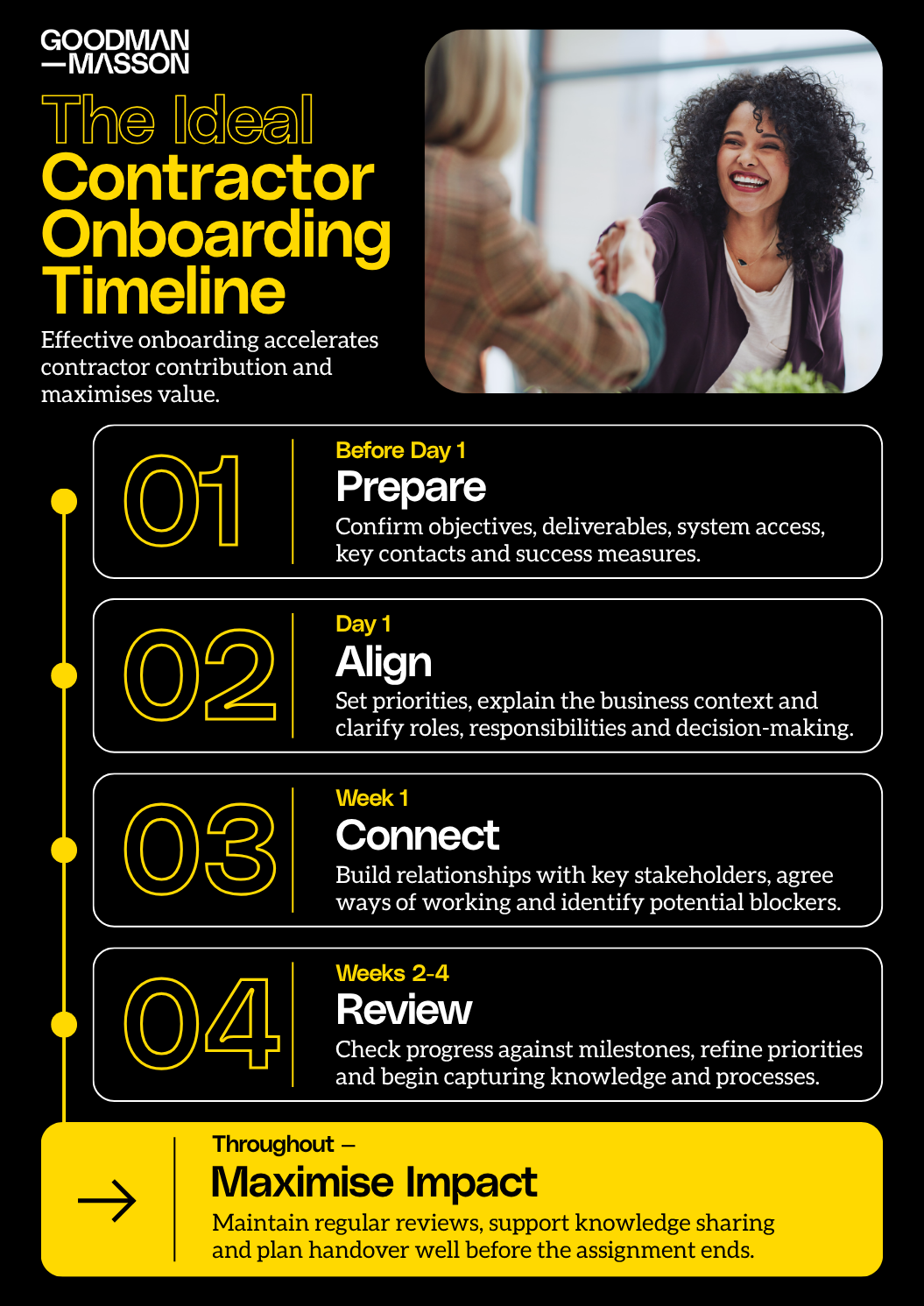
Contractors are usually hired because an organisation needs expertise quickly. That makes an effective contractor onboarding process particularly important.
Before your contractor or interim starts make sure they:
Strong contractor management best practices avoid assuming that an experienced contractor requires no onboarding. They may know how to deliver a transformation programme or implement a finance system, but they still need to understand how your organisation operates.
Good onboarding should provide answers as to why a contractor has been brought in, what outcomes they are accountable for, and how success will be assessed.
Performance management should return to the outcomes agreed at the beginning of the engagement.
Avoid assessing success purely by whether tasks were completed or a contractor remained busy. Instead, consider:
Reviews should also happen throughout the assignment rather than only at the end. This gives both the organisation and contractor an opportunity to identify changing priorities and resolve barriers before they affect delivery.
If you are several contractors, consistent measures across assignments can also improve future engagements by showing where flexible talent delivers the greatest value.
The value of a contractor should not always disappear when the assignment finishes. Contract and interim professionals bring experience gained across different organisations, technologies and operating models.
That creates an opportunity to strengthen the capability of permanent teams through mentoring, documentation, process improvement and knowledge sharing.
Temporary and contract hiring can also support wider workforce planning by helping employers identify future skills requirements and build stronger permanent talent pipelines rather than treating flexible hiring in isolation.
That same thinking should apply during an assignment.
Making capability building part of your contractor management best practices increases the long-term return from every assignment.
Together, these practices turn contracting from a short-term resource decision into part of a stronger workforce strategy.
Finding the right contractor quickly matters, but so does creating an environment in which they can deliver.
Goodman Masson supports organisations requiring temporary, contract and interim expertise across finance, accounting, technology, transformation and housing, helping clients access specialist talent for critical projects, leadership gaps and periods of change.
Our role can extend beyond placement and we offer support to help you get greater value from specialist flexible talent.
Whether you need specialist expertise for a transformation programme, additional capacity within a finance function or experienced interim leadership, the right contract workforce solutions should deliver value well beyond filling an immediate gap.
Speak to Goodman Masson about your contract and interim hiring requirements.

Use these contractor management best practices to improve performance and help your contract workforce deliver impact.

%20(1).jpeg)
.jpg)
.jpg)
.jpeg)